Lock Repair North Melbourne
Some lock faults can reasonably be repaired or adjusted. Others are more practically resolved by replacement. This page explains how to tell the difference, and what a repair actually involves.
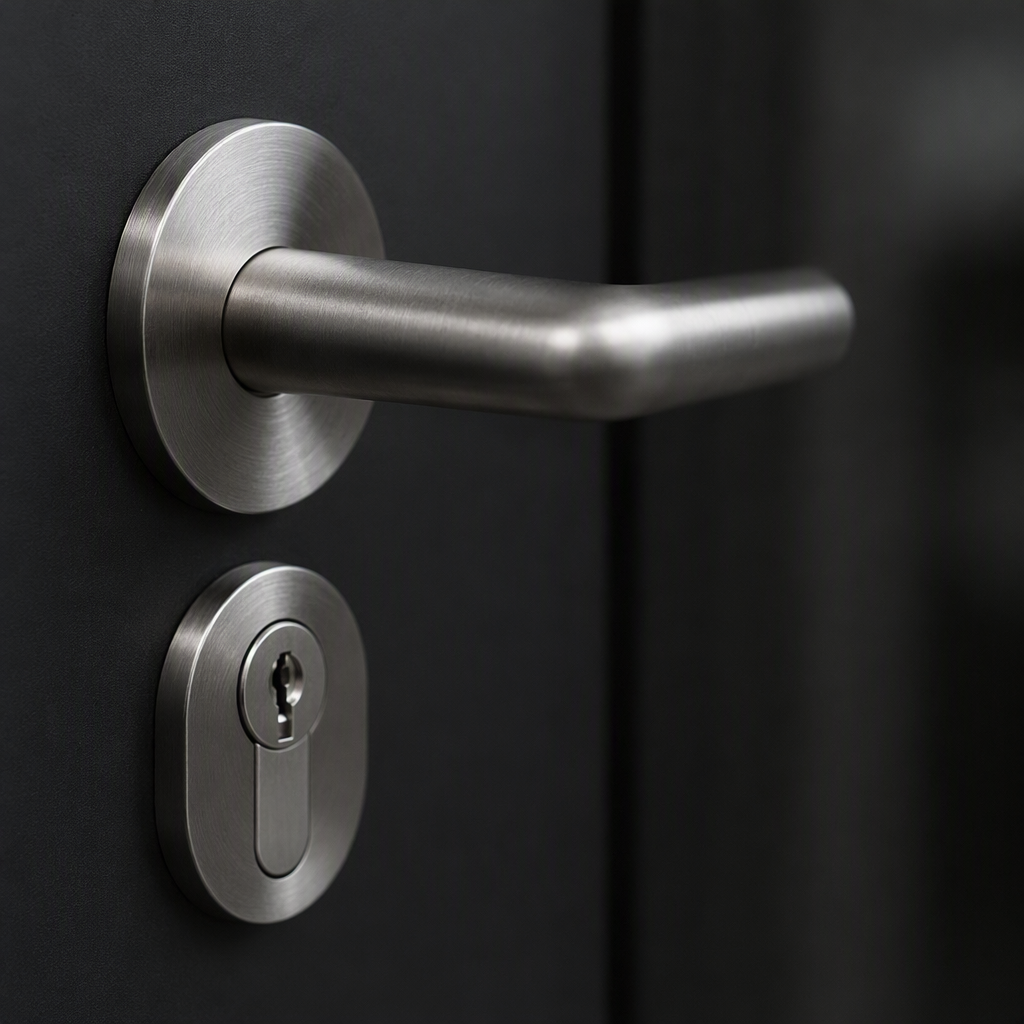
A repair keeps the existing lock on the door and corrects a specific fault. That might mean realigning a strike plate, servicing a cylinder, adjusting a latch, re-securing or replacing a handle assembly, or dealing with a door that has moved enough to put the mechanism under load.
The important honesty here is that not every lock can be repaired, and not every lock should be. A repair on hardware that is already at the end of its service life usually reappears as the same complaint a few months later.
Signs of a faulty lock
- The key needs force, wiggling or a particular angle before the mechanism turns.
- The door must be lifted, pushed or pulled before the key will operate.
- The latch does not catch reliably, so the door can be pushed open when it appears closed.
- A lever or knob no longer springs back fully to its resting position.
- The deadbolt throws smoothly with the door open but binds when the door is closed.
- There is visible damage around the cylinder, the escutcheon or the strike plate.
- The lock has become noticeably noisier, gritty or inconsistent over time.
Difficult operation
Stiff operation is the single most common complaint, and it is frequently not a lock fault at all. In older North Melbourne housing, timber doors and frames move with moisture and buildings settle. When that happens, the latch and the keep stop lining up, and the mechanism has to work against the door.
The tell is simple: if the lock operates smoothly with the door open and binds only when the door is closed, the problem is alignment rather than the lock. In that case adjusting the strike, easing the door or correcting a hinge resolves the symptom without new hardware.
Worn components
Wear is cumulative and specific. Cylinder components lose tolerance, springs weaken, latch faces round off, and keys themselves wear — a worn key in a worn cylinder is a compounding problem, and cutting a fresh key from a worn original reproduces the fault.
Where wear is confined to one serviceable component and the lock body is otherwise sound, replacing that component is a legitimate repair. Where wear is distributed across the mechanism, the sensible answer changes.
Damaged hardware
Physical damage is assessed on the door. Depending on what has failed, the outcome may be a component replacement, a repair to the surrounding hardware, or a full replacement of the lock. Damage that affects how the lock holds in the door — a broken case, a distorted faceplate, a compromised strike or a damaged frame — is generally not a candidate for repair alone.
Where the frame or door itself has been damaged, that has to be addressed as part of the work. Fitting sound hardware into a door that cannot hold it is not a fix.
When repair may be appropriate
- The lock body is sound and the fault is specific and serviceable.
- The problem is alignment, adjustment or lubrication rather than mechanical failure.
- A single component can be replaced individually and parts are obtainable.
- The hardware is well matched to the door and to how the entry is used.
- The lock is of a type where servicing is a recognised and reliable option.
When replacement may be more practical
Replacement tends to be the better answer when a mechanism is worn beyond adjustment, when damage affects how the lock holds, when parts are no longer available for older hardware, or when the current lock was never well suited to how the door is used — a domestic-grade latch on a commercial entrance, for example.
It is also common after a door has been altered, rehung or replaced, since the new arrangement may not suit the original hardware.
The lock replacement page covers what that involves, and repair vs replacement compares the two directly.
What we will not tell you
We will not tell you that every lock can be repaired. Some cannot, and saying otherwise leads to work that does not last. If a repair is not the right answer for your door, you will hear that before anything is started rather than afterwards.
Lock repair questions
When should a lock be repaired?
Repair can be appropriate when the lock body itself is sound and the problem is a specific, serviceable fault — a misaligned strike plate, a dry or dirty cylinder, a loose handle, or a component that can be adjusted or replaced individually. Repair is less appropriate when the hardware is significantly worn, damaged, or no longer suits how the door is used.
When should a lock be replaced?
Replacement tends to make sense when a mechanism is worn beyond adjustment, when the lock has been physically damaged, when parts are no longer obtainable, or when the current hardware is not well matched to the door. Replacement is also common when a door has been altered or when access requirements have changed.
Can you help with damaged locks?
Damaged locks are assessed on the door. Depending on what has failed, the outcome may be a repair, a component replacement, or a full lock replacement. Not every damaged lock can be repaired, and we would rather tell you that up front than attempt a repair that will not hold.
How much does a locksmith cost?
Cost depends on the type of lock, the door and frame, the work required and what hardware is needed. Because those variables change the answer significantly, we do not publish fixed prices. Describe the situation through the quote form and you will get a response based on your actual property rather than a generic figure.
Next step
Describe the symptom through the quote form. Useful detail: the property type, which door, what the lock looks like, and whether the problem happens with the door open, closed, or both. Coverage is listed on the service areas page.
Get back to what you were doing.
Tell us what is happening with your lock, door or access and we'll help you understand the next step.
15 Melrose St, North Melbourne VIC 3051, Australia