Commercial Locksmith North Melbourne
Offices, retail premises and commercial buildings. Commercial doors carry heavier duty cycles and more stakeholders than domestic entries, which changes both how faults appear and how work gets authorised.
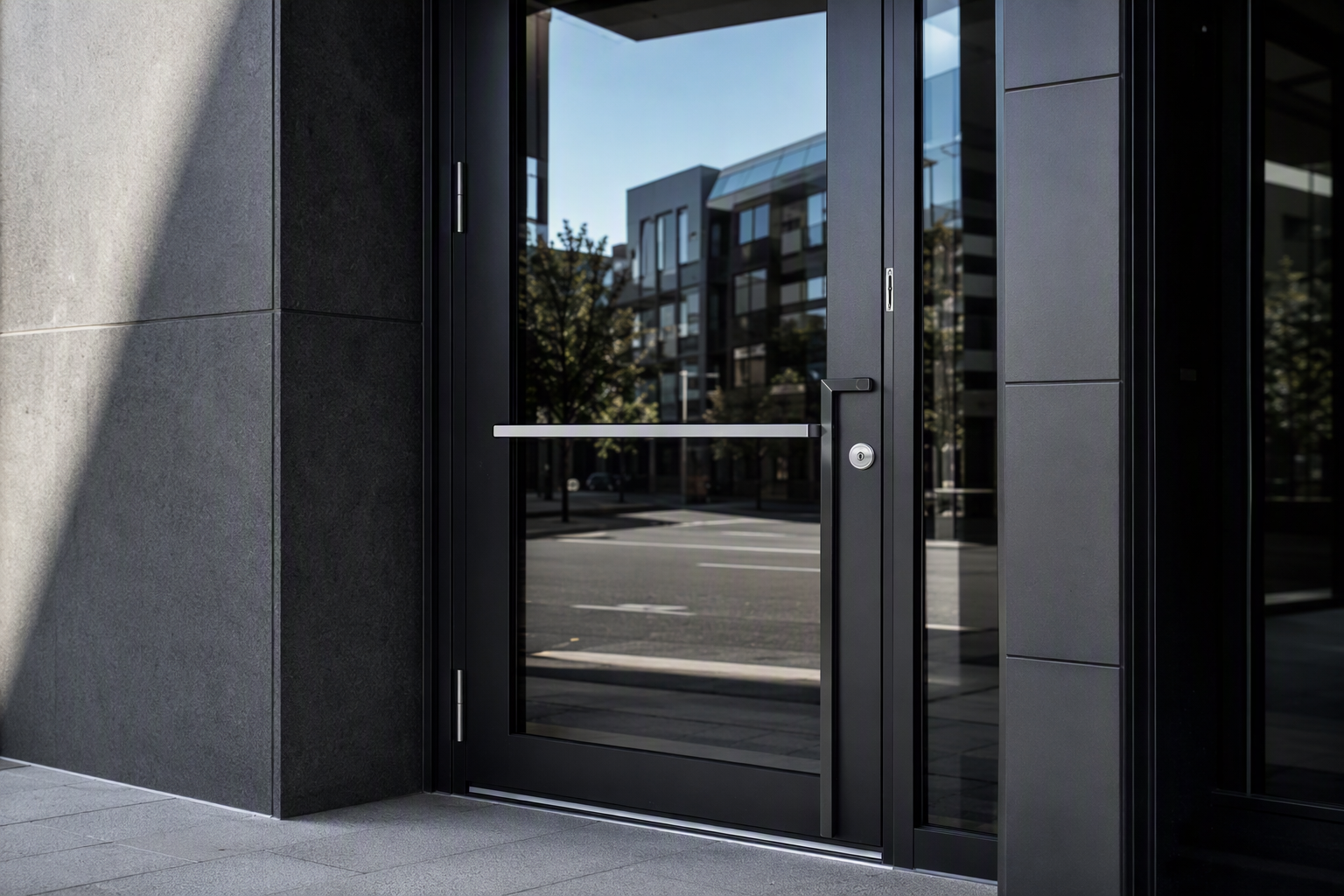
A retail entrance may cycle hundreds of times a day. Hardware chosen for a domestic door will not survive that pattern, and wear that would take years in a house can appear within months in a shop or an office. Commercial locksmith work is shaped by that difference.
Because the wear is gradual, the symptoms tend to be gradual too — which makes them easy to live with until they fail at an inconvenient moment. Acting on a latch that has become harder to catch is considerably less disruptive than dealing with it during trading hours.
Offices
Office floors and suites typically involve a tenancy entry plus internal doors, store rooms and comms or service cupboards. Keys are often distributed across staff, cleaners and contractors, and the record of who holds what is not always current.
- Tenancy entry doors with closers, where alignment and closing force affect whether the latch engages.
- Internal doors and store rooms where access needs to change as teams change.
- Situations where keys are unaccounted for and the practical question is repair, replacement or rekeying.
- Coordination with the building owner or manager where the door is part of base-building fabric.
Retail premises
Shopfronts combine high use with glass and aluminium door construction. The hardware is typically a patch lock or cylinder in a narrow stile, often paired with a closer and sometimes with a push bar. Those components interact: a closer that is out of adjustment puts load on the latch, and a latch under load wears faster.
Rear and service doors are worth including in any assessment. They are used less often and consequently attract less attention, which is exactly why problems there tend to be discovered at the worst time.
Commercial buildings
In larger and mixed-use buildings, doors fall into two categories: those inside a tenancy, and those that are part of the building itself — lobbies, stairs, car parks, plant rooms and service corridors. The second category is managed by the building, not by an individual occupant.
Doors in that second category frequently sit within requirements determined by the building and its documentation, including egress arrangements, door closers and hardware specified as part of a door assembly. Those requirements are established from the building's own documentation rather than assumed, and hardware decisions should be checked against how the door is required to perform.
Property managers
Managing agents are often the practical point of contact, particularly where a tenant has reported a fault but does not hold authority to approve work. Useful detail at the enquiry stage: the address and tenancy, which door is affected, what the symptom is, and who is authorising the work.
Where a portfolio has recurring issues across similar doors, it is usually worth looking at the doors together rather than one call at a time.
Building owners
For owners, the recurring question is whether to keep repairing hardware or replace it. The honest answer depends on the specific door: its use, its condition, the availability of parts and how the hardware matches the door it is fitted to.
The repair or replace comparison sets out how that decision is approached, and the commercial door article goes into more detail.
What we do not claim
To be straightforward about scope: this page does not assert security certifications, compliance sign-off, accreditation schemes or insurance-approved status. Where a commercial door has requirements attached to it, those come from the building's documentation and the relevant authorities, and any hardware decision needs to be checked against them rather than against a marketing claim.
Commercial questions
When should a lock be replaced?
Replacement tends to make sense when a mechanism is worn beyond adjustment, when the lock has been physically damaged, when parts are no longer obtainable, or when the current hardware is not well matched to the door. Replacement is also common when a door has been altered or when access requirements have changed.
Do you provide commercial locksmith services?
Yes. Commercial work covers offices, retail tenancies and commercial buildings, and is often coordinated with a property manager or building owner. Commercial doors typically use heavier hardware than domestic entries, so the assessment step matters more.
Can you help with damaged locks?
Damaged locks are assessed on the door. Depending on what has failed, the outcome may be a repair, a component replacement, or a full lock replacement. Not every damaged lock can be repaired, and we would rather tell you that up front than attempt a repair that will not hold.
Do I need to provide identification or proof of access?
Yes. Before work is carried out on a lock, it is standard practice to confirm that you are entitled to authorise it — for example as the owner, the resident, or an authorised representative such as a property manager. This protects you and the property. Having identification or documentation available helps the job proceed without delay.
Coverage
Commercial work is carried out in North Melbourne and nearby areas including West Melbourne, Kensington, Melbourne CBD, Docklands and Carlton. The service areas page lists coverage, and the contact page has the enquiry form.
Get back to what you were doing.
Tell us what is happening with your lock, door or access and we'll help you understand the next step.
15 Melrose St, North Melbourne VIC 3051, Australia